Précis: Findings from this study suggest that most dentists in Ireland are supportive of the concept of direct access (DA) to dental hygienists. Such change must be accompanied by robust planning, training, and regulation. People with disabilities, children, the elderly, and people in nursing homes would benefit from the introduction of DA, with the highest perceived benefit in nursing homes (71%).
Introduction
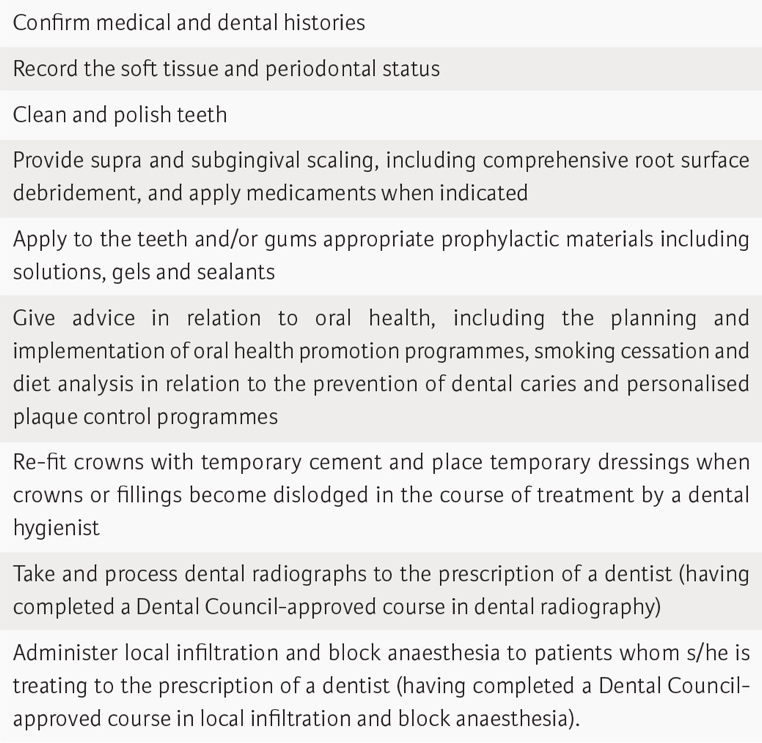
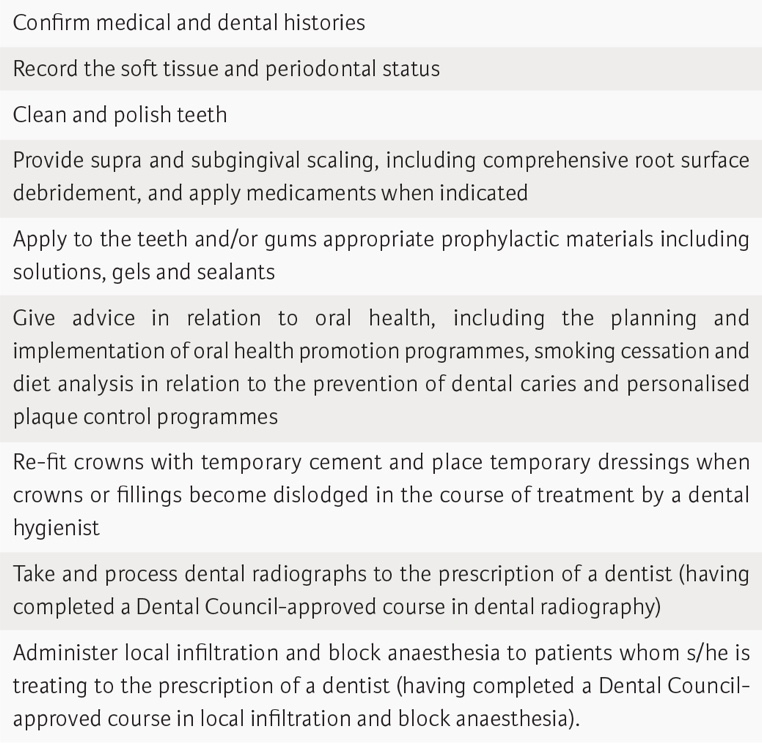
Dental hygienists (DHs) play a significant role in supporting oral health; they educate patients, promote oral health, and deliver preventive oral care. In Ireland, DHs have practised since the early 1980s; however, the profession gained legal recognition with the amendment in 1990 of the Dentists Act 1985. The first national diploma programmes commenced in Dublin Dental University Hospital in 1992 and in Cork University Dental School and Hospital in 1993, followed by the establishment of the Irish Dental Council Register of Dental Hygienists. Following this formal recognition of the dental hygiene profession in Ireland, the scope of practice for DHs expanded with the inclusion of: infiltration anaesthesia in 1997; radiography in 2001; and, block anaesthesia, placement of temporary dressings, and recementing crowns with a temporary cement when crowns or fillings become dislodged in the course of treatment by a dental hygienist, in 2007.1 Table 1 outlines the current scope of practice of DHs in Ireland.
Currently, DHs in Ireland must undertake treatment under the supervision of a registered dentist who has first examined the patient and who has indicated to the DH the course of treatment to be provided. DHs are trained to recognise dental disease, but the responsibility for the diagnosis of disease rests with the dentist.1
Public health continues to transform through technological innovation, emerging research, and evolving regulations. An example of regulatory development noted internationally is the introduction of direct access (DA) to DHs. According to international practices,2 DA refers to the ability of patients to access care from different members of the dental team, including DHs, without needing to see a dentist first. The dental professionals must be trained, competent, indemnified, and work within their scope of practice. DHs are not expected to make a diagnosis beyond their scope of practice. DHs should refer the patient to a dentist (or other relevant healthcare practitioner) when they identify areas of concern, or when treatment is required that is outside of their scope of practice.2,3
DA models are well established in 18 of the 25 member countries of the European Dental Hygienists Federation.4–6 DA has been available in the USA on a state-by-state basis since the 1980s.7 In a recent review of 26 countries, Bozia et al. reported that DA to a DH was permitted in 54% of the countries studied.8 DA reflects a broader move towards improving access to preventive oral healthcare, and recognises the contribution of DHs within integrated care systems.9,10
However, DHs in Ireland must still work “under the supervision of a registered dentist who has first examined the patient and indicated the course of treatment”; thus, the Dentists Act 1985 prevents the public from directly accessing preventive care from a DH.11,12 This requirement creates a barrier to DA for preventive dental care.
The Irish Dental Hygienists’ Association (IDHA) has advocated for removing the mandatory dentist supervision clause to align with international DA models.13 Evidence from other jurisdictions suggests that allowing DHs to work under DA can improve oral health outcomes, increase service efficiency, and expand access to preventive care.14
There is limited Ireland-specific research on dentists’ awareness, attitudes and readiness to support DA to DHs. Knowing what dentists’ attitudes to DA are, and their level of confidence in the quality of care DHs could provide under DA, is crucial for identifying barriers and enablers to policy change, workforce implementation, and the safeguards necessary for safe autonomous practice. The aim of this survey was to gain a better knowledge of the attitudes of dentists in Ireland in relation to the provision of treatment by DHs under DA.
Materials and methods
This cross-sectional study was carried out in Ireland between May 1 and 31, 2025. Ethical approval was obtained from the Research Ethics Committee, School of Dental Science, Trinity College Dublin (approval number DSREC 4579). The study was reported using the Strengthening the Reporting of Observational Studies in Epidemiology (STROBE) cross-sectional reporting guidelines.15 The participant information leaflet (PIL), consent form, and questionnaire were available online via a QR code link to Survey Monkey and shared on social media through the IDHA’s social network. Additionally, the QR code was distributed at the Irish Dental Association (IDA) Annual Conference on May 15-17, 2025. The completed consent forms used a tick-box format and the questionnaire was anonymous. A convenience sampling method was used, targeting dentists and dental specialists practising across Ireland who were accessible via professional networks. Collecting participants’ current career group and country of dental qualification allowed responses from a range of professional contexts to be assessed. The exclusion criteria were participants younger than 18 years old, undergraduate dental students, and dental practitioners practising outside of the Republic of Ireland.
The survey contained 11 multiple-choice questions and one free-text box to investigate dentists’ understanding and awareness regarding DHs practising under a DA model in Ireland, specifically to understand dentists’ confidence in DHs’ skills and competencies to assess, plan, and deliver safe, effective, high-quality care autonomously within their scope of practice. The questions used were drawn from the work of Hopcraft et al. and Ross and Turner.16,17 Some additional questions were developed by the research team to meet the aim of the study to cater for the local contextual setting. Questions 1-5 were profile questions. Questions 6-10 covered the issue of DA in multiple settings, with some questions having between six and 10 different sections. The questionnaire used a Likert scale with either four or six points. The response scale format differed depending on the question, and was either: very confident, confident, not confident, unsure/don’t know; or, very favourably, quite favourably, neutral, quite unfavourably, very unfavourably, unsure/don’t know. Finally, a free-text box was used to request comments or suggestions in relation to DA to DHs in an Irish context. A power analysis calculation for this study was not performed, as there were no published data in an Irish cohort and therefore no prior effect size estimates. Earlier international studies informed questionnaire development but differences in contexts limited their suitability for estimating an Irish sample size. This study should be interpreted as an exploratory cross-sectional survey.
One month was felt to be sufficient to gather data. Data from the survey were initially organised and cleaned using Excel, which allowed for sorting, filtering, and basic descriptive and inferential statistics. For the free text, a thematic analysis was undertaken independently by two of the research team members, one of whom is an experienced qualitative researcher, using Excel to sort the data into themes (Appendix). Any discrepancies were resolved through discussion until agreement was achieved, and the findings were summarised narratively.
Results
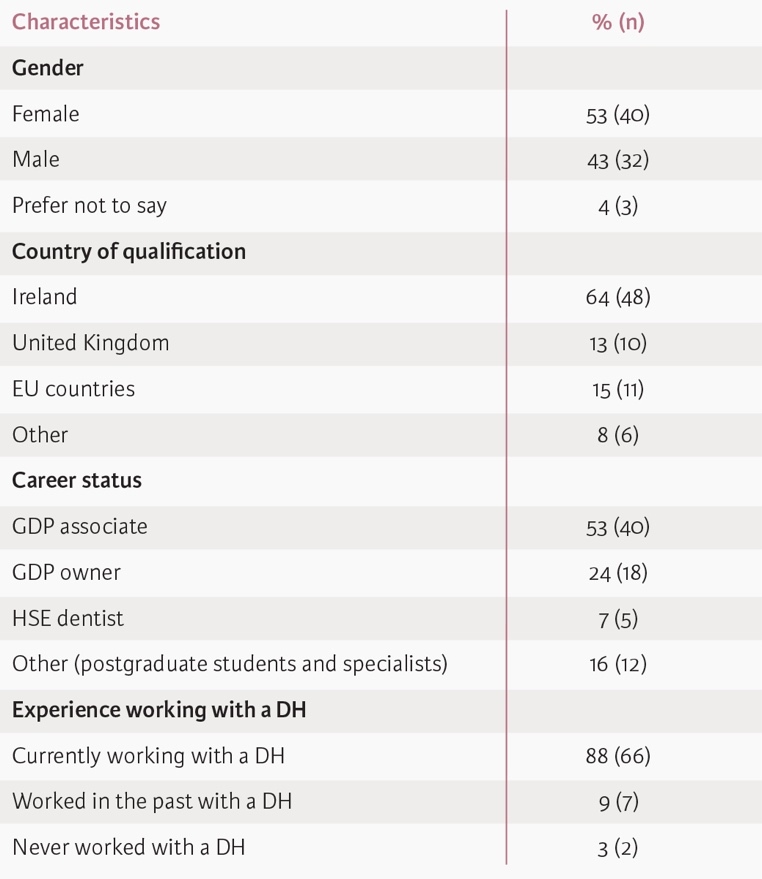
A total of 76 individuals completed the online survey. One respondent was excluded from the analysis as they were not a qualified dentist. Table 2 outlines the characteristics of the respondents.
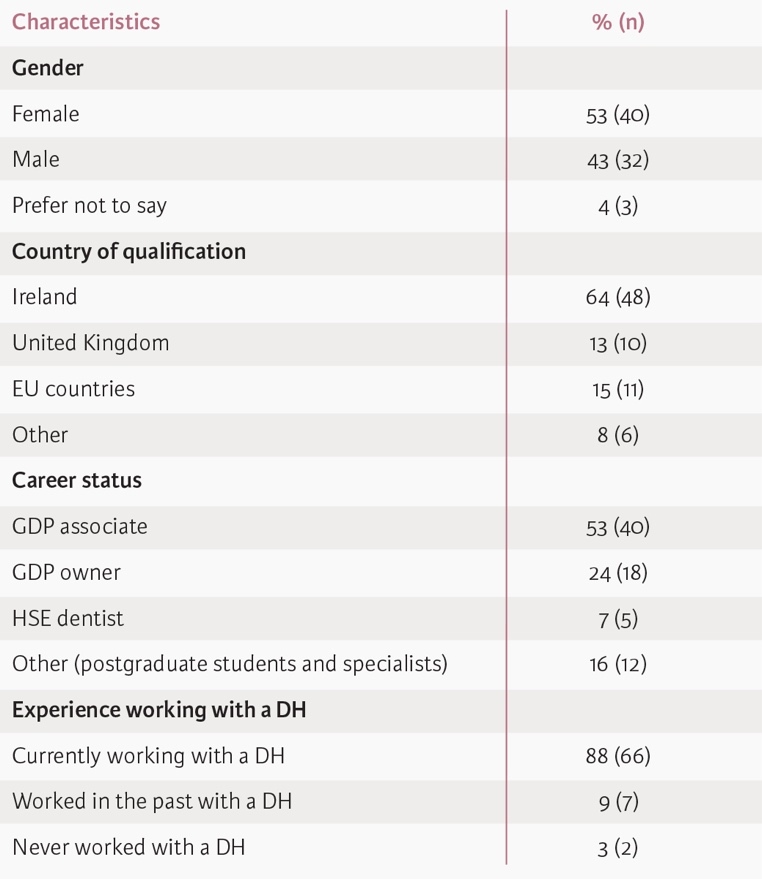
The participants indicated that they were male (43%, n=32), female (53%, n=40), or preferred not to say (4%, n=3). The country of graduation response was broken down into the following groups: Ireland (64%, n=48); United Kingdom (13%, n=10); EU countries (15%, n=11); and, other (8%, n=6). Half of the respondents (53%, n=40) indicated that they worked as an associate dental practitioner, and about one-quarter (24%, n=18) as owner of a dental practice. Only 3% (n=2) of the respondents had never worked with a DH; the majority were either currently working (88%, n=66) or had worked with a DH in the past (9%, n=7).
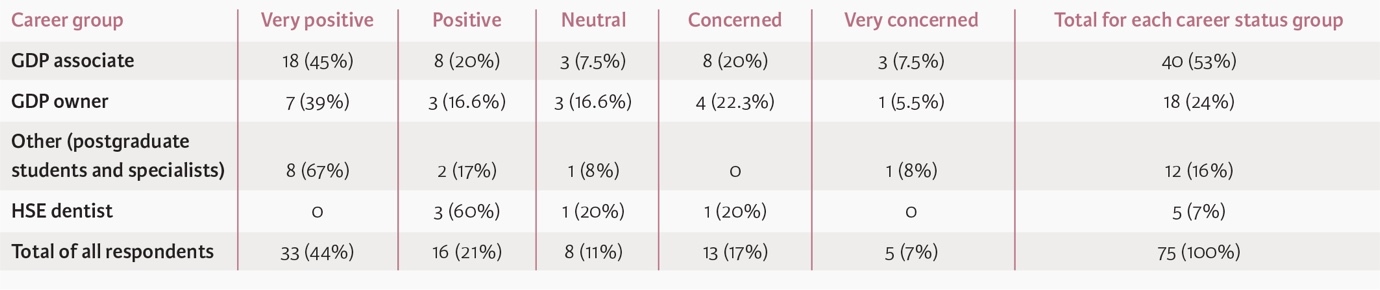
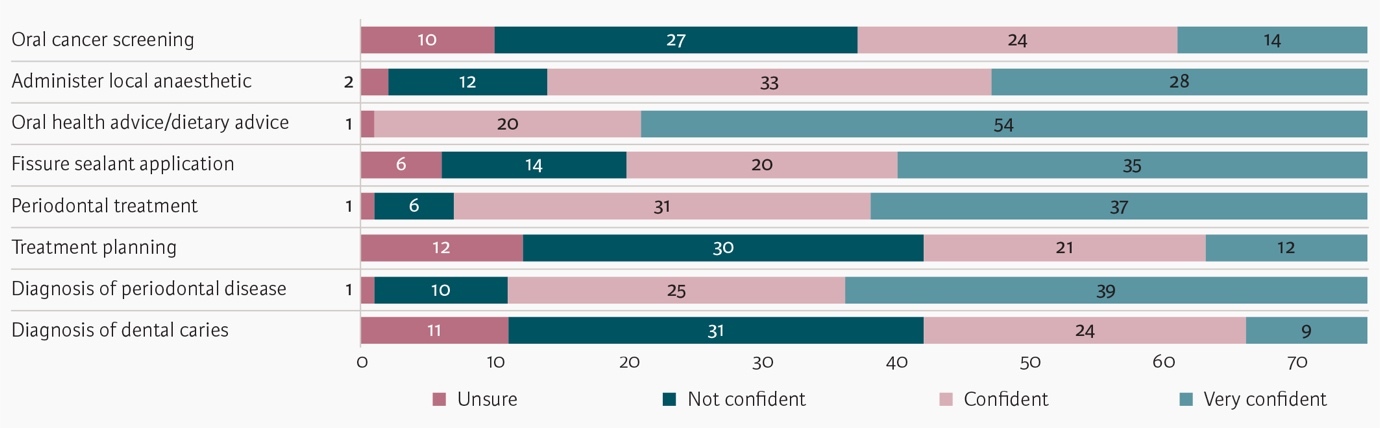
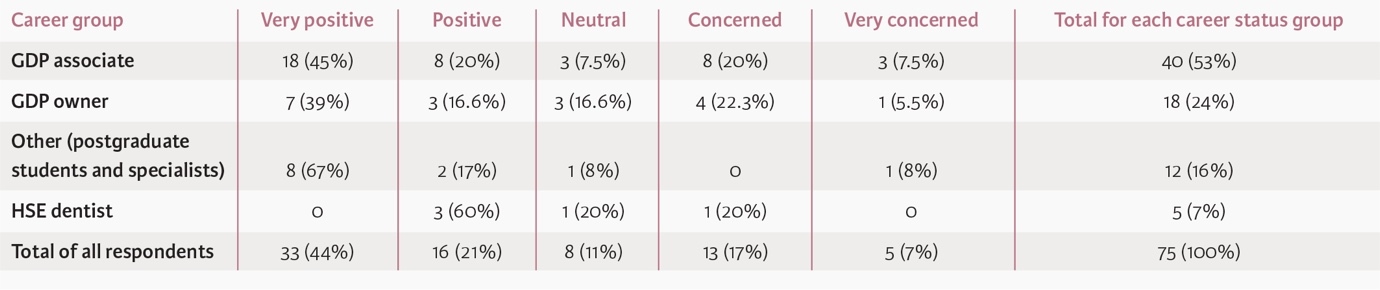
The majority of the respondents felt very positive (44%, n=33) or positive (21%, n=16) about the introduction of DA in Ireland, while one-quarter felt concerned or very concerned (24%, n=18) (Table 3). The respondents indicated high levels of confidence in relation to DHs providing oral health advice/dietary advice under DA (99%, n=74), providing periodontal treatment (91%, n=68), diagnosing periodontal disease (85%, n=64), and administering local anaesthetic (81%, n=61). However, the respondents expressed lower levels of confidence in DHs undertaking oral cancer screening (51%, n=38), diagnosing dental caries (44%, n=33), and developing treatment plans to cater for patients’ needs (44%, n=33) (Figure 1).
.jpeg)
Overall, most respondents felt that all groups of the population would benefit from the introduction of DA: the general population (64%, n=48), children (64%, n=48), the elderly (65%, n=49), and people with disabilities (65%, n=49). The highest perceived benefit was in nursing homes (71%, n=53).
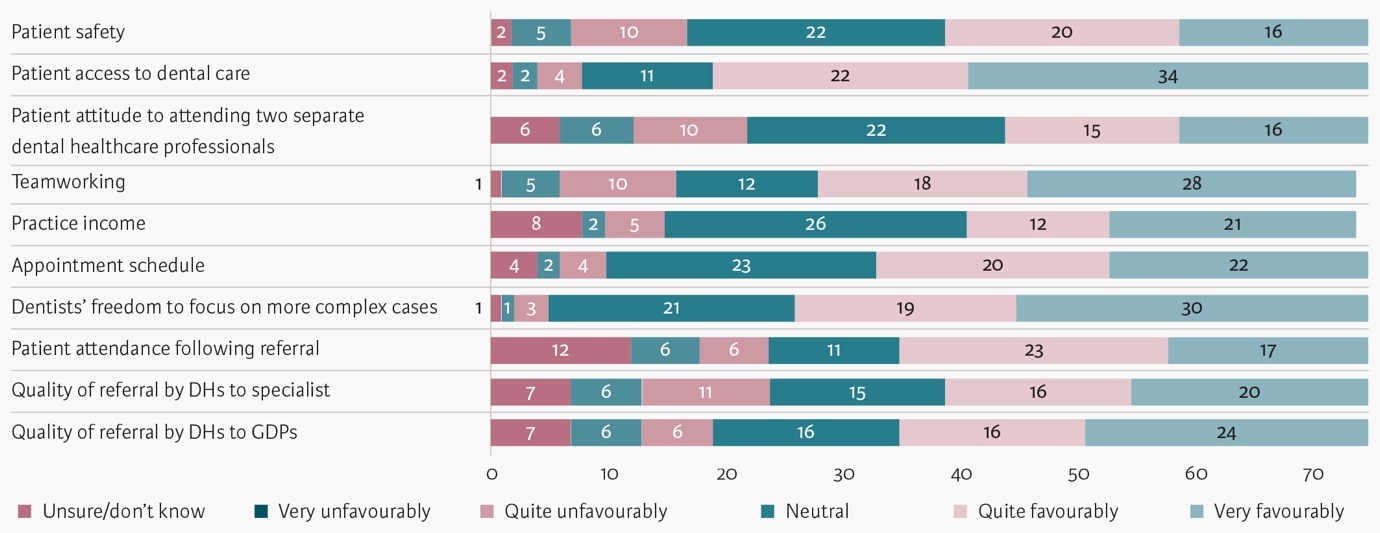
The majority of respondents considered DA likely to impact very favourably or quite favourably on patient access to dental care (75%, n=56). Fewer respondents felt that DA would impact very favourably or quite favourably on the quality of referral by DHs to general dental practitioners (GDPs) (53%, n=40) and specialists (48%, n=36). Fewer respondents were positive about their perception of patients’ attitudes to attending two separate dental healthcare professionals (41%, n=31 very favourably or quite favourably) (Figure 2).
.jpeg)
Respondents were categorised according to their date of graduation, by decade. The positive and favourable responses varied across graduation cohorts, with a drop in the 1990s compared to the 1980s, but increased steadily over the more recently graduated cohorts: from 60% in the 1980s and 44% in the 1990s to 80% in the 2000s, 84% in the 2010s, and 88% in the 2020s. A chi-square test of independence showed no statistically significant association between graduation decade and positivity (χ2=7.72, df=4, p=0.10); however, despite the lack of statistical significance, an encouraging trend towards increasing positivity among more recent graduates was observed.
Further analyses were carried out to examine responses by current career status. The proportion expressing positive or very positive views ranged from 56% among GDP owners to 84% in the ‘other’ category (Table 3). Although this suggests some variation between groups, a chi-square test of independence found no statistically significant association between career status and positivity (χ2=3.91, df=3, p=0.27).
The free-text comments from the questionnaire revealed a diverse range of views on the proposal of DA to DHs. Fifty respondents provided comments. Many respondents expressed strong support and enthusiasm; others raised concerns regarding diagnostic capability, patient safety, and training requirements. A further subset of comments highlighted a shortage of DHs and the need for structural changes within the profession before such initiatives could succeed. The analysis organised the feedback into four major themes: full support; workforce and access issues; conditional support; and, concerns and risks. Each theme is discussed in depth and illustrated with direct participant quotes in the Appendix.
Discussion
There is limited Ireland-specific research on dentists’ attitudes to DA to DHs. The purpose of this cross-sectional survey was to gain an understanding of the attitudes of dentists in Ireland in relation to the provision of treatment by DHs under DA.
The majority of the respondents felt very positive or positive about the introduction of DA to DHs in Ireland. Earlier studies internationally have not shown the same positive response to DA, but have found more positive attitudes towards expanding the scope of practice of DHs.17–19 If these studies were repeated now, they may have similar findings to this survey. Hopcraft et al., in 2008, felt that this opposition from dentists in Australia to the expansion of roles and scope of practice of DHs could be attributed to a fear of losing control over patient management, potential loss of income, or concerns for the quality of dental care provided by hygienists.17
The findings of Hopcraft et al. are supported by this study’s thematic analysis, which shows that participants emphasised clear referral pathways, competency evaluation, and additional training as essential requirements for the safe implementation of DA.
Irish dentists expressed high levels of confidence in relation to DHs providing oral health and dietary advice, providing periodontal treatment, diagnosing periodontal disease, and administering local anaesthetic under DA, but lower levels of confidence in DHs undertaking oral cancer screening, diagnosing dental caries, and treatment planning. This finding is similar to the findings of Hopcraft et al. in 2008, which indicated that dentists believed that DHs did not possess adequate training and education in examination, diagnosis, and treatment planning to practise independently, particularly with regard to the diagnosis of oral pathology.17 However, Brocklehurst et al. in 2015 undertook a study in the UK to assess the performance of primary care dentists (PCDs) and dental hygienists/therapists (DH-Ts) in the detection of malignant and non-malignant oral lesions. They concluded that DH-Ts should be considered as competent as PCDs as frontline healthcare workers with regard to the detection of mouth cancer. They highlighted the need for continuing training for all oral healthcare professionals in this regard.20
Ohrn et al. reported on the accuracy of DHs compared to dentists in Sweden in diagnosing and recording dental decay, and found no statistical difference, with the exception of initial lesions (white spot lesions) registered clinically, where the DHs recorded more buccal and lingual lesions than the dentists. The authors, while omitting details of the training of DHs in diagnosing dental caries in Sweden, stated that evaluation and diagnosis of dental caries demand education and experience.21 DHs in Ireland are trained to recognise dental caries. Any future extension of responsibilities to include diagnosis would require suitable education and regulatory approval. Similarly, Daniel and Kumar in the USA compared the identification of dental caries in four- to seven-year-old children by both DHs and dentists, and by both clinical and teledentistry methods, and found no difference.22
Challenges identified by respondents include workforce shortages and broader access issues within the Irish dental system, with respondents emphasising that the number of practising DHs is currently too low to meet population needs or to realise the benefits of DA (Appendix).
The number of dentists in Ireland increased by 27% between 2019 and 2025, and an increase in the number of training places in all training settings is currently under consideration.23 The number of training places for DHs has not increased in the last 20 years.24 The ratio of dentists to DHs in Ireland was reported to be 6:1 in 2023.12 In Canada, Japan, South Korea, and the USA, the ratio of dentists to DHs has been 1:1 for many years.25,26 In six of the 30 EU member states the ratio was less than 1:1 in 2007.27
Our thematic analysis also indicated conditional support if additional training in diagnosis, radiography, and treatment planning was undertaken. Respondents recommended competency assessments, mandatory continuing professional development (CPD), or a minimum number of years of experience before practising independently as a means to reassure dentists that DHs were safe to practice independently. A worldwide review of DHs’ radiology practice showed that 78% of countries (n=26) legally permitted DHs to take intra-oral radiographs. However, in 42% of the countries, the dentist first needs to provide a referral or indication for a radiograph. Only 27% of the countries permitted the DH to independently own radiographic equipment.8 Collectively, these themes reflect a profession that sees potential in expanding DH practice in Ireland, but emphasises that such change must be accompanied by robust planning, training, and regulation.
In summary, many respondents viewed DA as a positive and modernising step that could enhance efficiency, broaden access to care, and better utilise the skills of DHs. Yet, others highlighted concerns around diagnostic safety, training standards, and the risk of patients bypassing essential dental examinations. Workforce shortages emerged as a critical system-level barrier.
Some of the concerns highlighted suggest that a full understanding of what DA would permit was not present – in particular, in relation to treatment planning and diagnosis. Under DA, DHs must be trained, competent and indemnified, and work within their scope of practice; they are not expected to make a diagnosis or plan treatment beyond their scope of practice.
The frustration of the Dental Council in relation to new legislation to replace the outdated and inadequate Dentists Act 1985 was evident in a letter to the editor of the Irish Examiner, published in 2023, which stated that between 2005 and 2015, the Dental Council had made five submissions to the Department of Health about introducing new legislation, and held multiple workshops and meetings with the Department to progress this.28 A sixth submission was made in October 2023.29 In addition, the Dental Council submitted a letter to the Joint Oireachtas Committee on Health regarding the challenges facing dentistry in Ireland in March 2026, but to date no new legislation has been introduced.30
Strengths and limitations
The strength of this survey is that it is the first to assess the attitudes of dentists in Ireland in relation to DA to DHs. There are several limitations to be acknowledged. The number of respondents relative to the number of dentists on the Dental Council Register is low. It is possible that only those with strong feelings one way or the other may have responded. Also, the use of the IDHA social media network for the distribution of the questionnaire may have contributed to a selection bias, as respondents connected with the IDHA may have more favourable attitudes towards DHs. However, the questionnaire was also circulated at the IDA Annual Conference, where a wider cohort of dentists were offered the opportunity to complete it. It is important to use caution when interpreting the results, as they are not entirely representative of all dentists in Ireland.
Conclusions and recommendations
While accepting the limitations of this exploratory cross-sectional survey, it can be concluded that the concept of DA to DHs was broadly welcomed by dentists practising in Ireland, although some reservations and concerns do exist.
Conditional support suggests that a phased, training-dependent or collaborative model may bridge the divide between enthusiasm and caution. DA has potential to strengthen the dental care system in Ireland, but its success will depend on thoughtful implementation, updated training pathways, clear regulatory guidance, and alignment with broader workforce planning.
Recommendations
-
An information leaflet could be developed jointly by the IDHA, the IDA, and the Dental Council to clarify the exact meaning of DA to DHs in Ireland, to outline the scope of practice, and explain what changes might be expected as a result of the introduction of DA to DHs. This information leaflet could be circulated to all dentists in Ireland, and followed by a larger survey of dentists’ attitudes.
-
Findings from this survey may inform regulatory deliberations by the Dental Council, the Department of Health, professional education and CPD providers, the IDHA advocacy strategy, and policymakers designing implementation strategies (referral pathways, clinical governance, and safeguards) to support safe, evidence-based DA to DHs in Ireland.